Art Connoisseur Corner
Our monthly special selection of fantastic masterpieces on Numismatics, Exonumia, and Scripophily. Enjoy!
February 2026 Selection
1908 dated Uncanceled 5,000,000 Capitalisation 20 Denomination 5% Bond printed by Waterlow & Sons Limited, London Wall, London, E.C. The Qing dynasty, which lasted from 1644 to 1912, marked the last imperial dynasty in China. Established by the Manchus, it was the second dynasty to conquer and govern all of China, effectively expanding the territory previously held by the Ming dynasty. The Manchus, initially known as the Jurchens, inhabited the northeastern regions of the Ming territory beyond the Great Wall. They emerged as a formidable threat to the waning Ming dynasty after Nurhaci unified the Jurchen tribes, and his successor, Hong Taiji, proclaimed the founding of the Qing dynasty in 1636. The Qing dynasty introduced the Eight Banners system, which served as the foundation for its military campaigns.
In 1644, a peasant uprising led by Li Zicheng captured Beijing, prompting the emperor Chongzhen's suicide. The Manchus allied with the Ming general Wu Sangui to retake Beijing, which subsequently became the capital of the Qing dynasty. They then defeated the remaining Ming loyalists in the south. The Manchu conquests were marked by immense loss of life and a significant decline in China's economic prosperity, with estimates suggesting that the conflict resulted in the deaths of up to 25 million individuals. The early Manchu emperors adeptly blended Central Asian ruling traditions with Confucian principles of governance, thereby being recognised as a legitimate Chinese dynasty. The item ordered may not be the exact piece shown in the image.
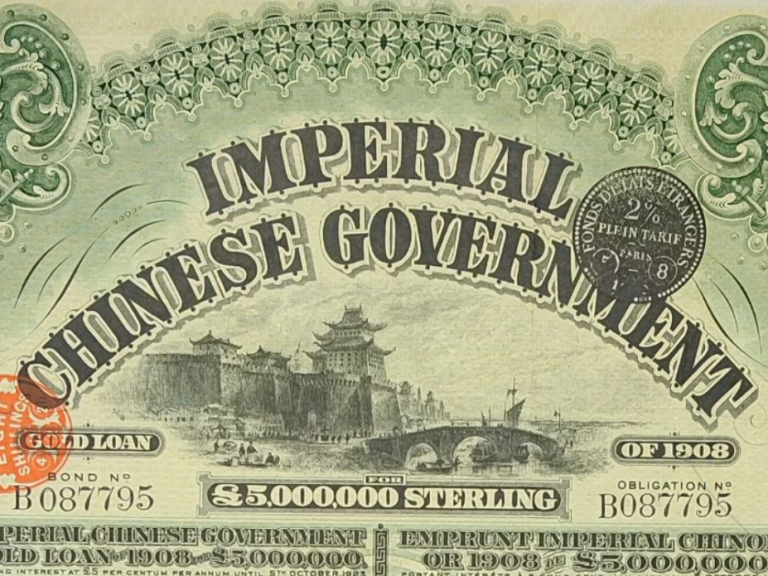
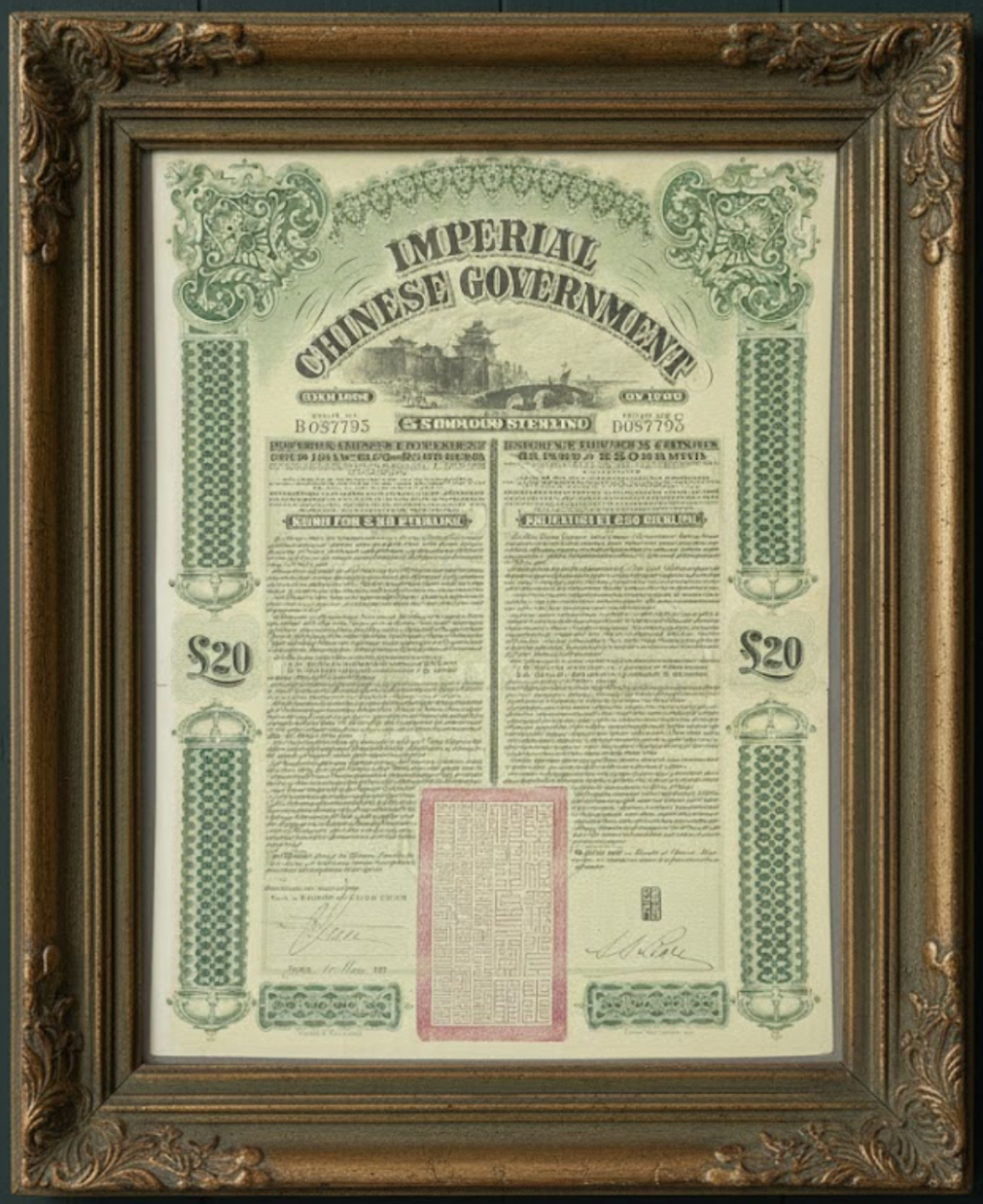
1908 Gold Loan Bond” issued by The Imperial Chinese Government (Qing Dynasty)
“Western Gate Peking” appeared on the “1908 Gold LoanBond” issued by
The Imperial Chinese Government (Qing Dynasty)
Printed by London Wall, London E.C.
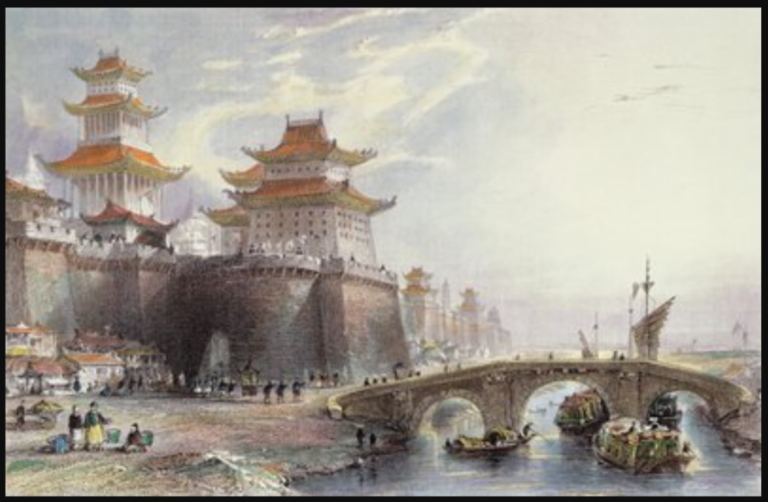
Western Gate of Peking, 1843 (Colour litho)
Thomas Allom
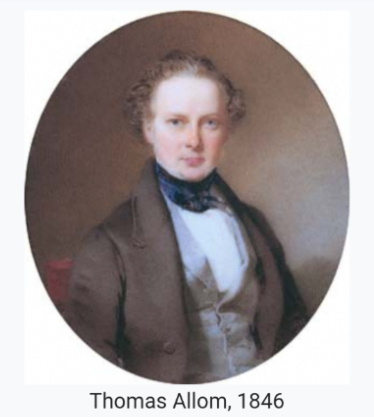
Thomas Allom (13 March 1804 – 21 October 1872) was an English architect, artist, and topographical illustrator. He was a founding member of what became the Royal Institute of British Architects (RIBA). He designed many buildings in London, including the Church of St Peter's and parts of the elegant Ladbroke Estate in Notting Hill. He also collaborated with Sir Charles Barry on numerous projects, most notably the Houses of Parliament, and is recognised for his numerous topographical works, including Constantinople and the Scenery of the Seven Churches of Asia Minor (1838) and China Illustrated (1845).
Art Connoisseur Corner