The Disappeared Krampus
The Krampus (German: [ˈkʁampʊs]) is a horned anthropomorphic figure who, in the Central and Eastern Alpine folkloric tradition, is said to accompany Saint Nicholas on visits to children during the night of 5 December (Krampusnacht; "Krampus Night"), immediately before the Feast of St. Nicholas on 6 December. In this tradition, Saint Nicholas rewards well-behaved children with small gifts, while Krampus punishes badly behaved ones with birch rods.
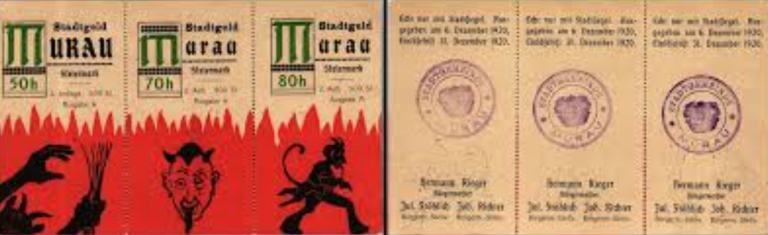
In the 17th century, Krampus was paired with St. Nicholas as a helper. Because Nicholas is a saint, it wasn’t logical or deemed saintly behaviour for Nicholas to deliver punishments. Therefore, a helper was assigned to St Nicholas, such as Farmhand Rupert, Schmutzli, Père Fouettard, or Zwarte Piet, who would go down the chimney or punish the naughty children. Krampus served St Nicholas in the same role.
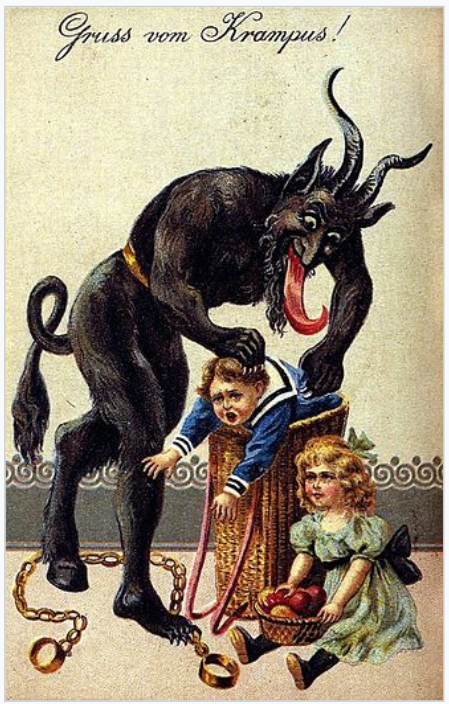
Although Krampus appears in many variations, most share some common physical characteristics. He is hairy, horned, usually brown or black, and has one foot with the cloven hooves of a goat. His long, pointed tongue lolls out, and he has fangs.
Krampus carries chains, thought to symbolise the Devil's binding by the Christian Church. He thrashes the chains for dramatic effect. Bells of various sizes sometimes accompany the chains. Krampus will carry a bundle of birch branches with which he occasionally swats children. In some representations, the birch branches are replaced with a whip. On the eve before St. Nicholas Day (6th of December), Krampus travels with St. Nicholas, a sack or basket strapped to his back; this is to cart off evil children for drowning, eating, or transport to Hell. Some older versions mention naughty children being put in a bag and taken away. This quality can be found in other companions of Saint Nicholas, such as Zwarte Piet.
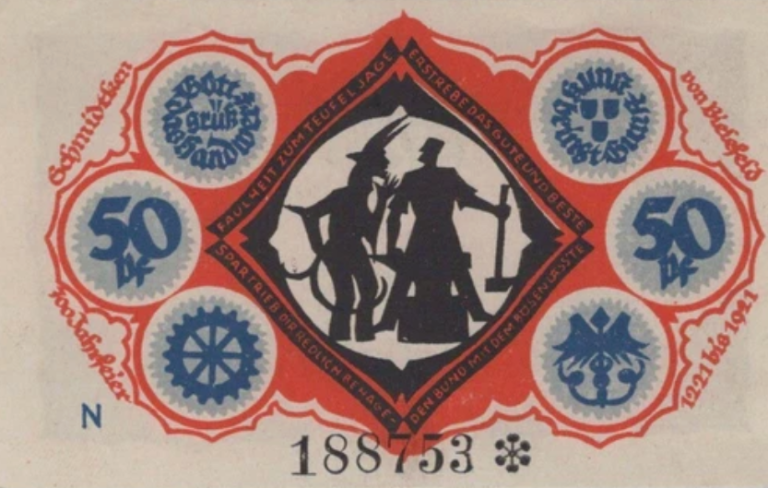
In the 20s, Krampus was easy to find, even on Euro banknotes. Afterward, Krampus seems to vanish from our world. Listen to our December Podcast and find out the story behind it.
Unlock Thousands of Numismatics, Exonumia, and Scripophily Stories
Every artifact has its own story, representing the culture and economy of its era and shaping history.
Podcast NESM Story of Dec2025