Unlock Thousands of Numismatics, Exonumia, and Scripophily Stories
Every artifact has its own story, representing the culture and economy of its era and shaping history.
Numismatics Exonumia Scripophily Museum (NESM) Monthly Story. Swag - Bank Deposit Book from the Bank Robbed by Bonnie & Clyde, First National Bank, Stuart, Iowa.
Podcast NESM Story of Nov2025 Bonnie & Clyde
Bonnie Elizabeth Parker (October 1, 1910 – May 23, 1934) and Clyde Chestnut "Champion" Barrow (March 24, 1909 – May 23, 1934) were American outlaws who traveled the Central United States with their gang during the Great Depression, committing a series of criminal acts such as bank robberies, kidnappings, and murders between 1932 and 1934. The couple was known for their bank robberies and multiple murders, although they preferred to rob small stores or rural gas stations. Their exploits captured the attention of the American press and its readership during what is occasionally referred to as the "public enemy era" between 1931 and 1934. On May 23, 1934, they were ambushed and killed on Louisiana Highway 154 in Bienville Parish, Louisiana, by a law enforcement posse led by retired Texas Ranger Frank Hamer. They are believed to have murdered at least nine police officers and three civilians.
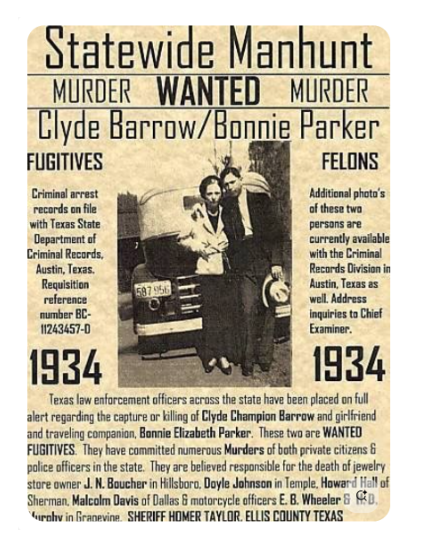
The Legacy and Impact of Bonnie and Clyde
The story of Bonnie and Clyde has left a profound impact and legacy on both American history and popular culture.
Romanticization of Crime
Bonnie and Clyde's crime spree occurred during the Great Depression. At a time of widespread public distrust of the government and banks, their robberies (even though they primarily targeted small stores and gas stations) were, to some extent, romanticized by the public. They were often viewed as rebels challenging a corrupt system. Their young, wild image, especially the police-released photos of Bonnie clutching a pistol and casually posing with a cigar, transformed them from simple criminals into sensationalized crime stars, capturing national attention.
Cultural Depiction (Influence on Pop Culture)
Their most enduring legacy stems from films and music, which often downplay the actual violence of their crimes and instead bestow upon them an aura of anti-establishment heroism:
- Films:
- The 1967 movie, Bonnie and Clyde, was the most influential work. Despite being highly fictionalized and historically inaccurate, it was a critical and commercial success that revived interest in the pair and imbued them with a romantic aura.
- The 2019 Netflix film The Highwaymen offered a contrasting perspective, focusing on the manhunt led by the lawman Frank Hamer.
- Music: Many songs have been written about them, including one by Serge Gainsbourg and Brigitte Bardot.
- Literature: Bonnie Parker herself wrote poems during her brief periods of confinement, the most famous being "The Trail's End" (also known as "The Story of Bonnie and Clyde").
Impact on Law Enforcement
The cross-state movements of Bonnie and Clyde and other "public enemies" of the era (such as John Dillinger and "Pretty Boy" Floyd) effectively exploited the state-line rule, which limited law officers' jurisdiction to their own state or county. Their activities prompted changes in American law enforcement, accelerating the growth and expanded authority of national law enforcement agencies like the FBI, which possessed interstate jurisdiction.
Enduring Symbolism
Today, "Bonnie and Clyde" has become a cultural idiom, commonly used to refer to a very close couple or partners in crime/adventure who are inseparable.
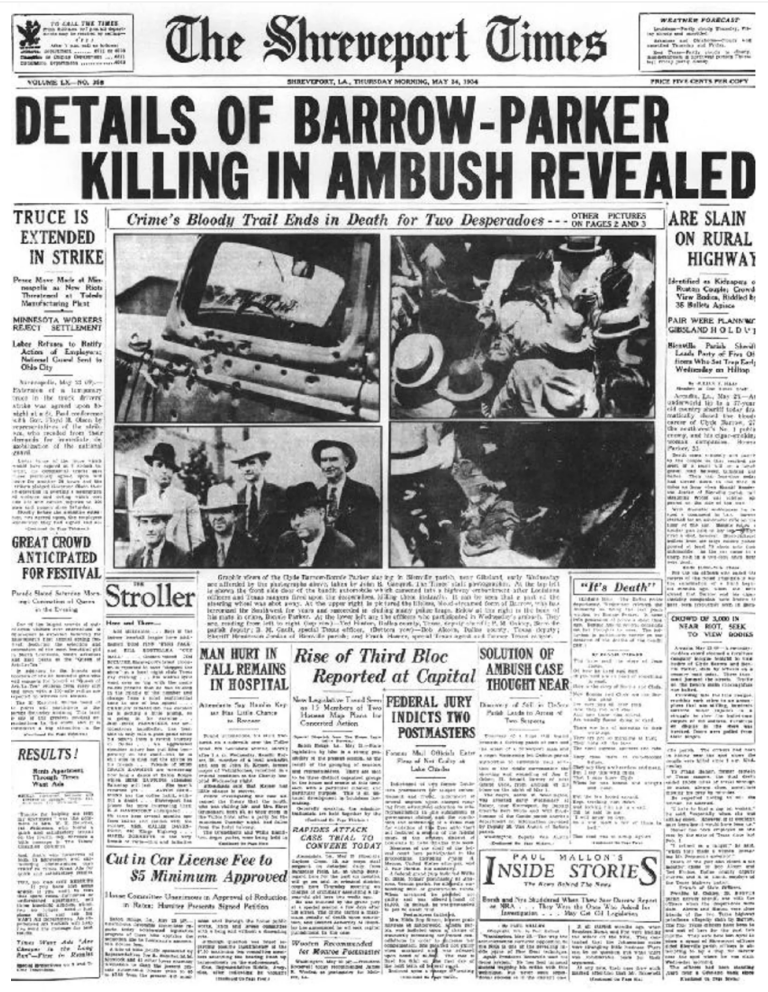
Insurance Policies
The American National Insurance Company of Galveston, Texas, paid the life insurance policies in full on Barrow and Parker. Since then, the payout policy has changed to exclude payouts in cases of death caused by any criminal act by the insured.