United States Semiquincentennial
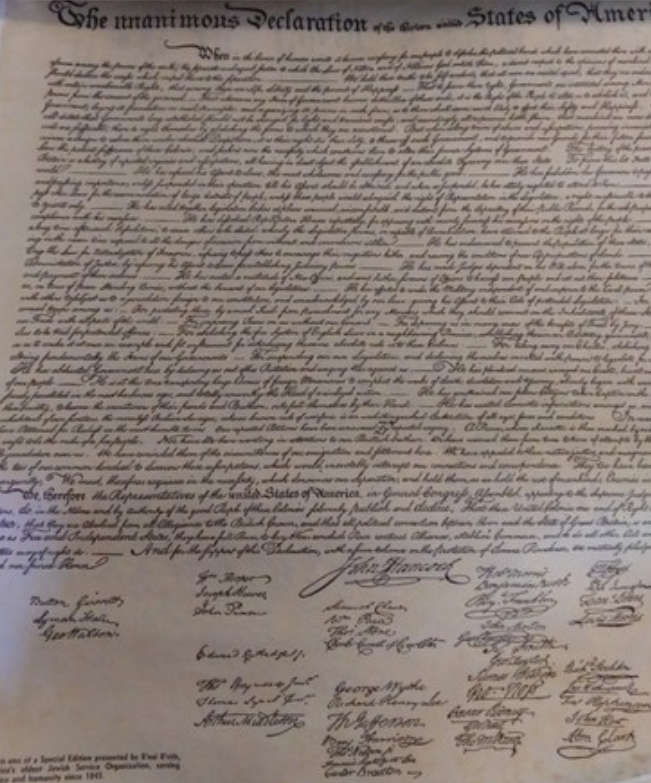
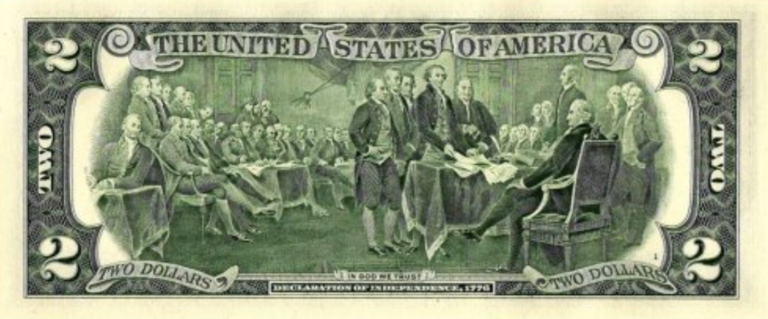
Declaration of Independence
Year
1852
The Declaration of Independence is the foundational U.S. document, adopted by the Continental Congress on July 4, 1776, formally announcing the thirteen American colonies' separation from Great Britain, asserting natural rights (Life, Liberty, Pursuit of Happiness) and the right to self-governance, and outlining grievances against the King. Primarily drafted by Thomas Jefferson, it declared the colonies "Free and Independent States," justified revolution, and sought international recognition, making July 4th America's Independence Day.
Engraving and Printing
Year
1754
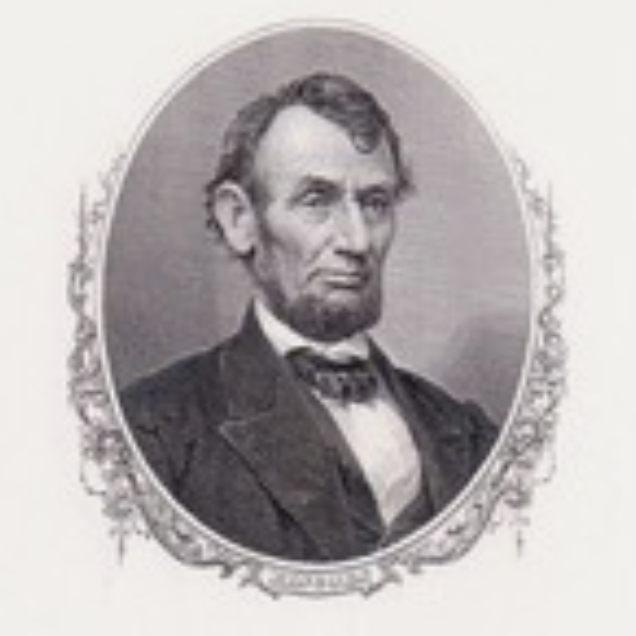
Collection from the American Banknote Company and the U.S. Bureau of Engraving and Printing (Woodcut/Steel) of the presidents of the United States, generals of the Civil War, and others' proofed print.
Printing Plate and Roll
Year
1778
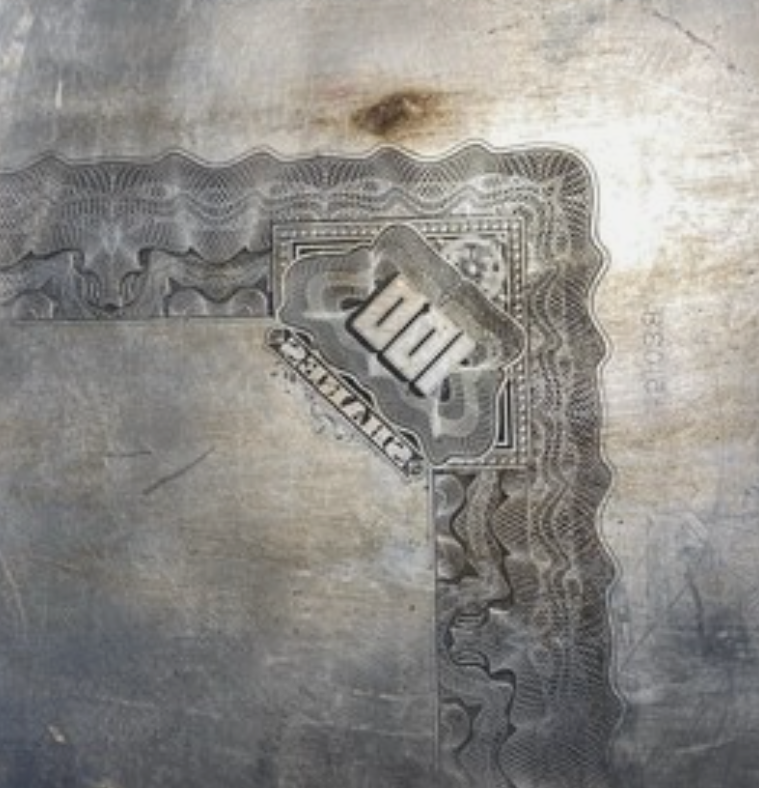
Collection of steel-engraved plates and rolls for banknotes and loans/bonds certificates printing (American Banknote Company and the U.S. Bureau of Engraving and Printing).
Celebrating 250 Years of American History
The 250th anniversary of American Independence, known as the United States Semiquincentennial or America250, will culminate on July 4, 2026, marking 250 years since the adoption of the Declaration of Independence, with exhibitions focusing on the nation's history, values, and future through NESM's authentic financial heritage. The following are samples from each era and category.
Declaration of Independence
Parchment. Actual Original Size Replica Edition by B’nai B’rith Museum
North Carolina NC Colonial Currency Note
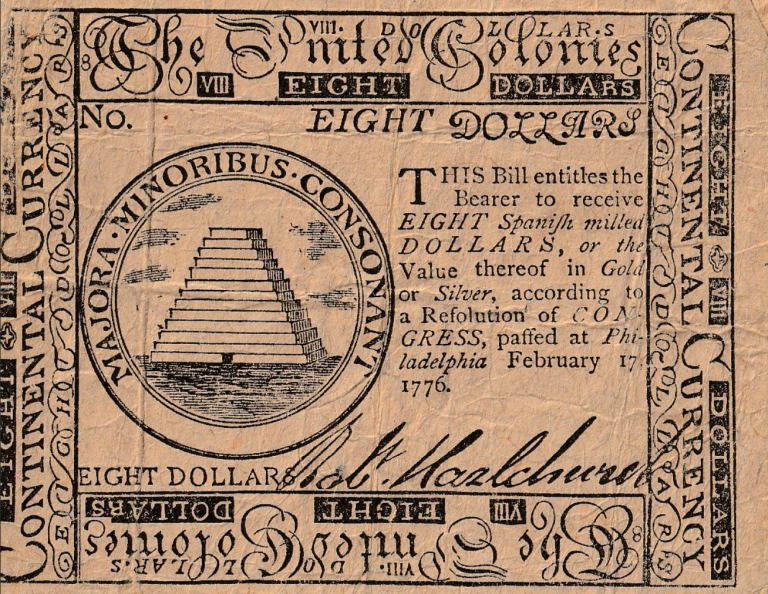
Continental Currency note
Designed by Francis Hopkinson
Obsolete Notes
Year
1800s
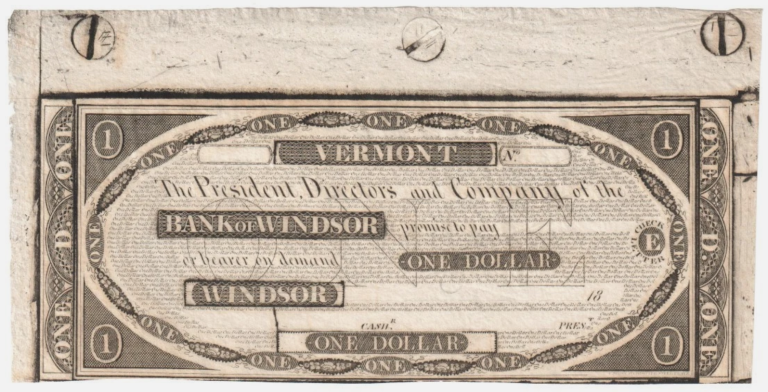
Also known as the "Broken Bank Notes", Currency issued by private banks, railroads, or local governments (1792-1860s) before the National Banking Acts, Obsolete Notes were hand-signed, larger size, varied by issuer, often rendered worthless when the issuer failed.
Colonial Notes
Year
1754
After the American Revolutionary War began in 1775, the Continental Congress began issuing paper money known as Continental currency, or Continentals, to help fund the American Revolutionary War.
Year
1778
The Bank of Windsor, Vermont
1 Dollar Banknotes, unissued, UNC.
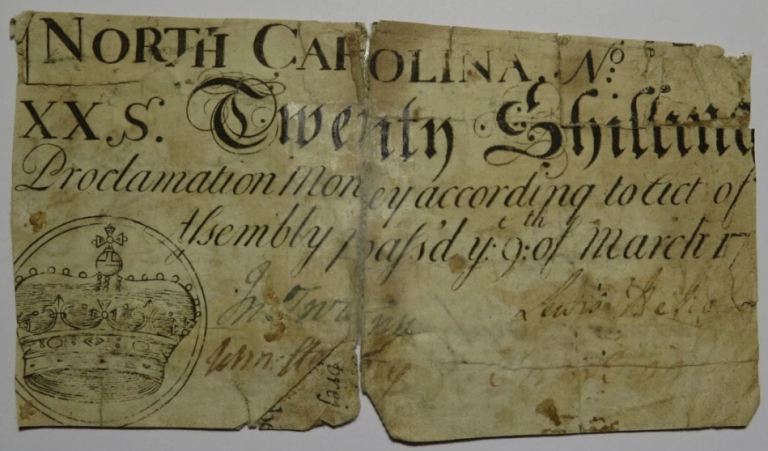
Paper currency in the United States was first issued by the Massachusetts Bay Colony in 1690 to fund military expeditions. Other colonies quickly adopted issuing paper notes.
North Carolina NC Colonial Currency Note
Continental Currency
National Banknotes
Year
1859
US National Banknotes emerged with the National Bank Acts (1860s) and continued until 1935 (when Federal Reserve Notes replaced them), issued by federally chartered banks from 1863 to 1935.
National Banknotes featuring unique charter numbers and unified designs, while Obsolete Notes are highly varied, often hand-signed "broken bank" notes reflecting local economies before a single national currency system was established.
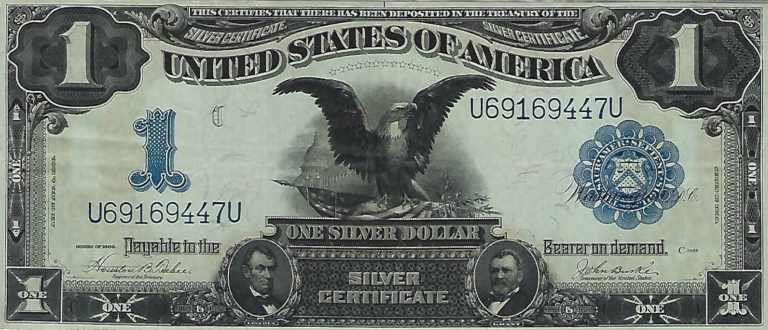
Silver Certificate
Year
1899
Silver Certificates were a type of representative money issued in the United States between 1878 and 1964 as part of the United States' paper currency circulation. They were produced in response to silver agitation by citizens who were angered by the Fourth Coinage Act, which had effectively placed the United States on a gold standard. The certificates were initially redeemable for their face value in silver dollar coins and, later (for one year from June 24, 1967, to June 24, 1968), in raw silver bullion.
Since 1968, they have been redeemable only in Federal Reserve Notes and are thus obsolete, but still valid legal tender at their face value and an accepted form of currency.
Federal Reserve Notes
Year
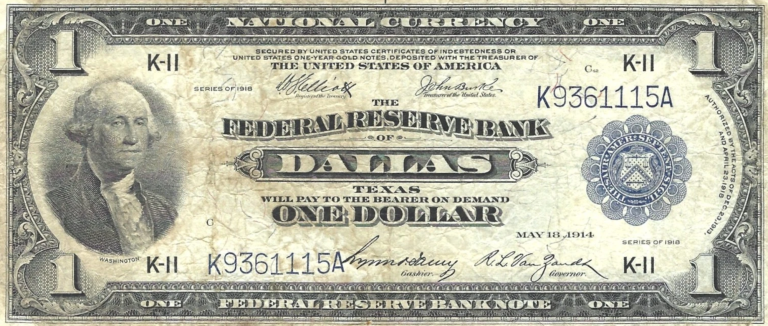
1918
Federal Reserve Notes are the currently issued banknotes of the United States dollar. The United States Bureau of Engraving and Printing, within the Department of the Treasury, produces the notes under the authority of the Federal Reserve Act of 1913 and issues them to the Federal Reserve Banks at the discretion of the Board of Governors of the Federal Reserve System. The Reserve Banks then circulate the notes to their member banks, at which point they become liabilities of the Reserve Banks and obligations of the United States.
1899 USD 1 SILVER CERTIFICATE "Black Eagle"
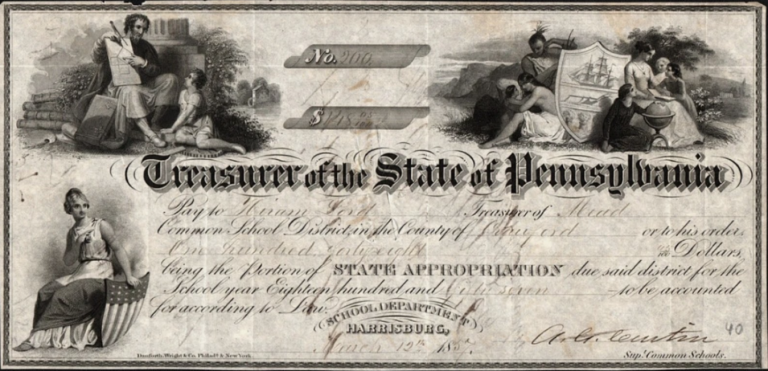
1859 Treasurer of the State of Pennsylvania
Harrisburg, School Department
1918 $1 Dallas Federal Reserve Bank Note
A 1929 National Currency note is a small-sized U.S. bank note from the last series of National Bank Notes, issued by specific national banks and marked "National Currency", transitioning from large to smaller notes with uniform on the lefthand side, featuring local bank details like charter numbers and city names, and distinguishing between Type 1 (black charter number) and Type 2 (black & brown charter numbers) versions before the Federal Reserve Note system fully took over.
Year
1929
Federal Reserve Bank of Illinois, Chicago
Small Note National Currency
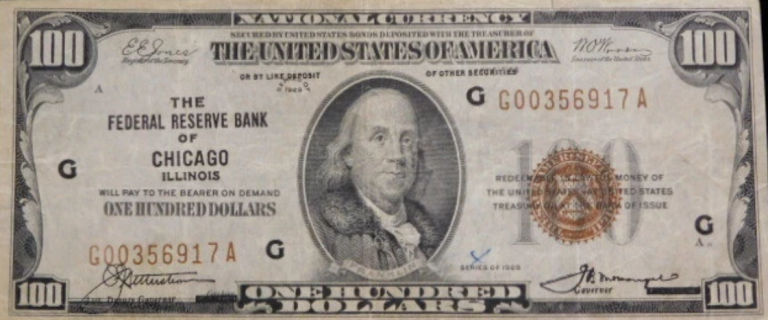
1929 National Currency note
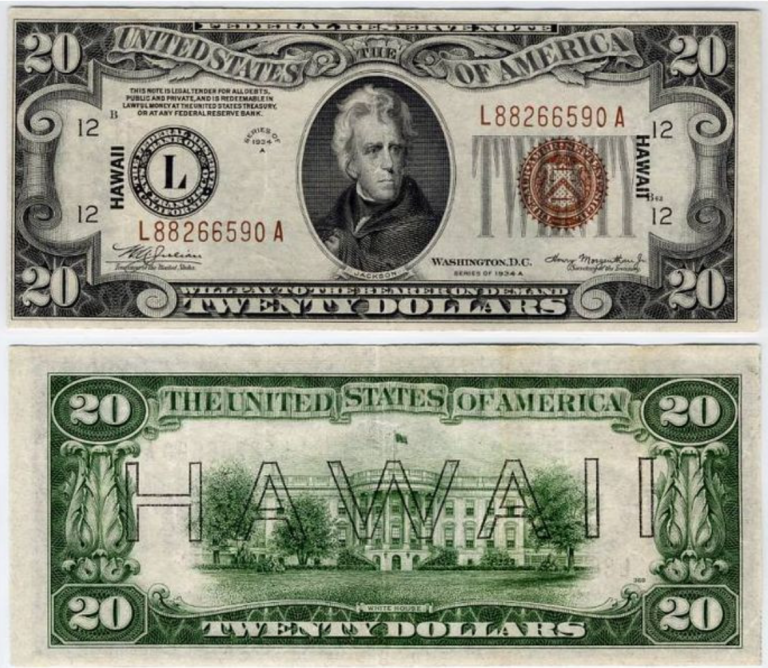
Hawaii and North Africa Silver Certificates are unique World War II emergency currency featuring distinctive overprints and colored seals, designed to be easily demonetized if captured by enemies, with Hawaii notes having a brown seal and "HAWAII" stamped on them for the Pacific theater, and North Africa notes featuring a bright yellow seal for troops in Europe and North Africa. Both series, primarily in $1, $5, and $10 denominations, Series Dates from the 1934, 1934A, and 1935A series, were intended to prevent enemy use, making them popular collectibles today.
Hawaii and North Africa Silver Certificates
Era
WWII
American Civil War Bonds
Year
1865
American Civil War bonds (1861 - 1865) were crucial debt securities sold by both the Union and Confederacy to finance the war, with the Union using prominent financiers to sell to citizens and institutions, while the Confederacy offered cotton-backed bonds in Europe to attract investment and potentially spur intervention, ultimately proving vital for both sides' war efforts despite challenges. They helped lay the groundwork for modern investment banking, with institutions like Goldman Sachs and J.P. Morgan rising during this era.
Confederate States Bonds, also known as "Cotton Bonds": A unique attempt to use the South's cotton reserves as collateral, attracting European speculators and aiming to encourage foreign recognition and intervention.
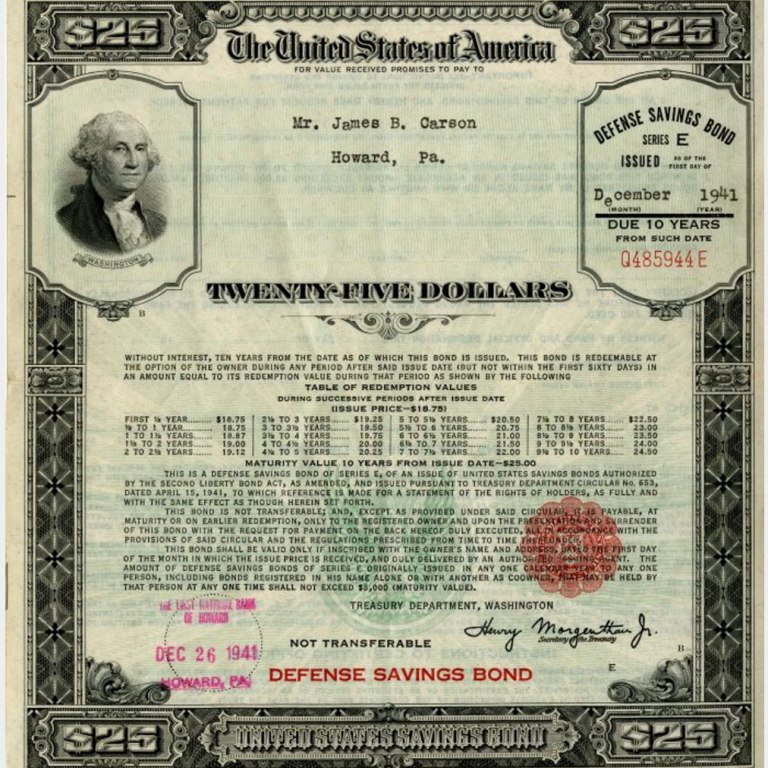
Defense Saving Bonds series E
Year
1941 -
- 1980
US Defence Bonds, Series E, were U.S. Treasury savings bonds first issued in 1941 to finance World War II, initially called "Defense Bonds" and later "War Bonds," becoming popular retail investments that matured over decades, were replaced by Series EE bonds in 1980, and stopped earning interest in 2010, with the last ones maturing after 40 years. They were sold at a discount and redeemed at face value, offering a safe way for citizens to save and support the government.
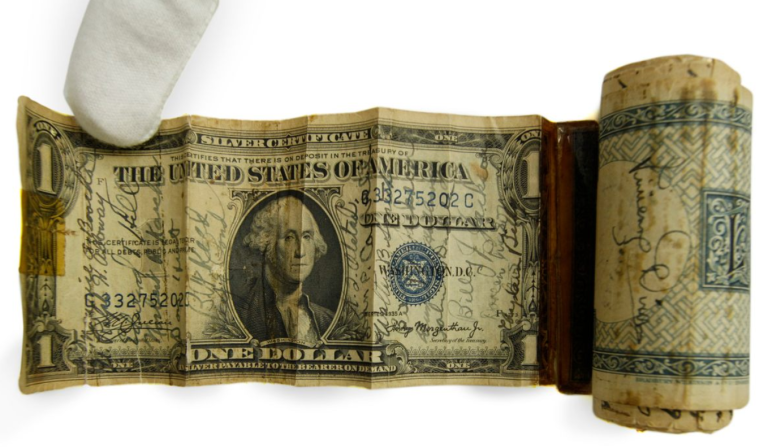
Short Snorter
Year
1920 -
- WWII
A "Short Snorter" is not a kind of banknote issued by bank, it is a collection of signed paper currency, often dollar bills, taped together, that served as a souvenir and status symbol, especially for Allied airmen in WWII, signifying they'd traveled widely; the tradition involved members buying drinks ("short snorts") for those who couldn't produce their bill when challenged, with the person with the shortest bill usually paying for the round. The name comes from "short snort," slang for a small drink.
"Short Snorter" started with pilots in the 1920s. During WWII, it became hugely popular with military personnel, with bills signed by famous figures such as generals, presidents (including Roosevelt), and Prime Minister Churchill. The names on those heritages were all heroes of the country.
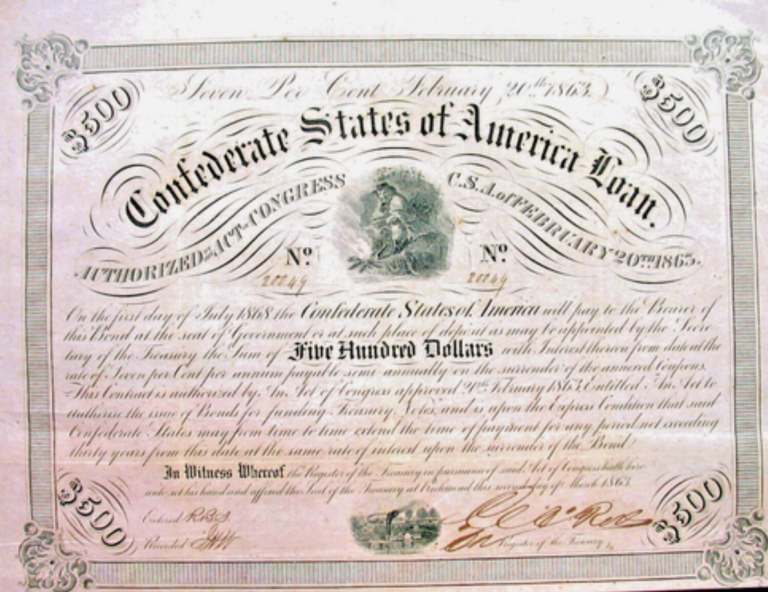
A Confederate States of America $500 bond, issued under the Act of Congress of February 20, 1865.
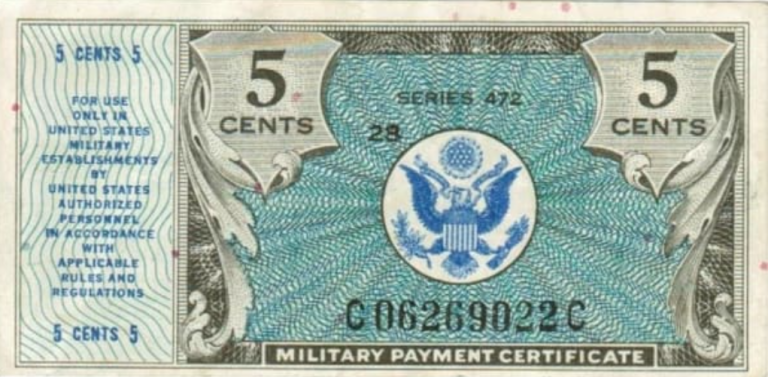
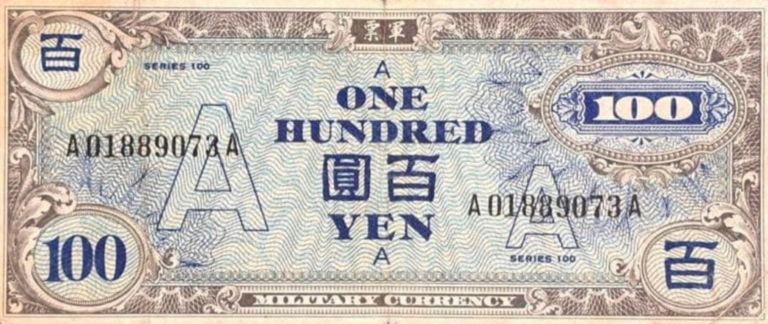
A/B-Yen and MPC
Year
1945 -
- 1973
Yes, Americans have officially issued Japanese currency banknotes before!
Two different types of scrip were issued during the occupation of Okinawa Prefecture by US forces. The United States military used a separate scrip called "A Type Yen" or "A-Yen", while "B Type Yen" was used only by local civilians.
Military payment certificates, or MPCs, were a form of currency used to pay United States (US) military personnel in certain foreign countries in the mid- and late-twentieth century. They were used in one area or another, from a few months after the end of World War II, until a few months after the end of U.S. participation in the Vietnam War – from 1946 until 1973. The certificates were made by line lithography to create colorful banknotes.
Military Chits
Year
1800S -
-Now
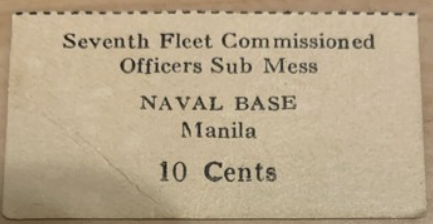
A small, often metal or paper token used within military bases or deployed locations as a substitute for currency, allowing soldiers to buy goods at Post Exchanges (PXs), snack bars, or clubs when regular money was scarce, essentially functioning as local scrip or vouchers for specific purchases. These tokens, sometimes called "chits," are collectibles now, representing a unique aspect of military life and commerce, separate from official currency.
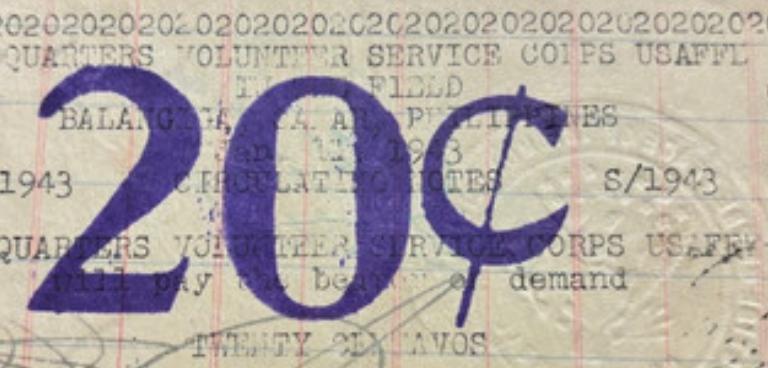
Guerrillas Currency
Year
1942 -
- 1945
During WWII in the Philippines, the USAFFE (United States Army Forces in the Far East) guerrillas and other resistance groups issued makeshift "emergency currency" or "guerrilla pesos" to operate under Japanese occupation, functioning as legitimate money for fighters and civilians.
7TH FLEET OFFICERS SUBMARINE BASE, MANILA, PHILIPPINES
MILITARY TRADE TOKEN CHIT for officers
United States Congress / Government Reports
Year
1826 -
-1906
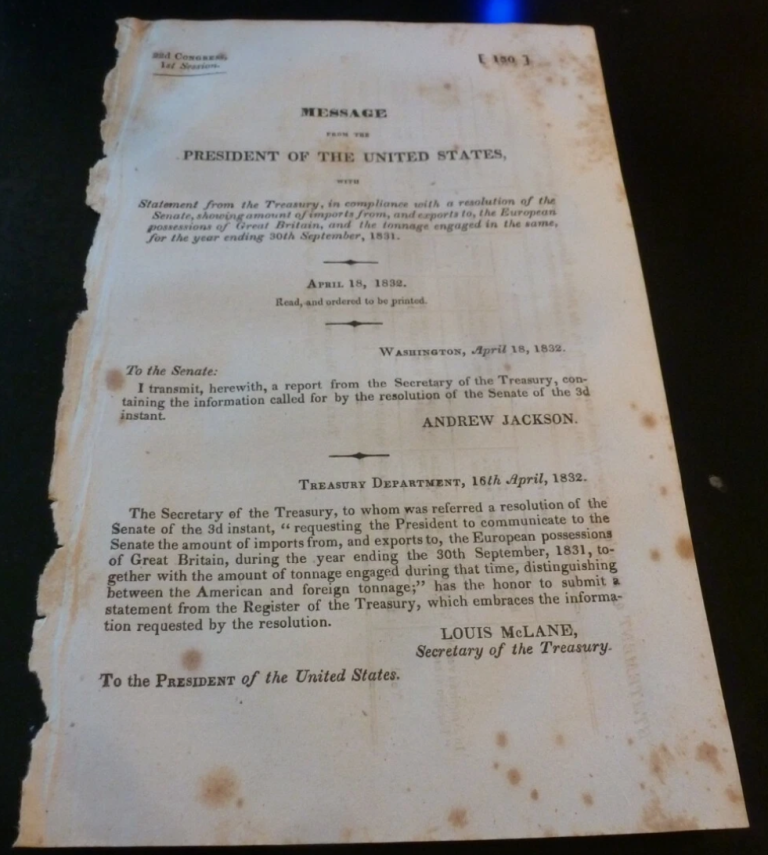
Selection by the World Economic & Finance Archives (WEFA) that reflects the history of the USA from the original Congress/Government reports on recorded incidents.
- 1826 Robert Brooke, Land Patuxent River, MD, Late War British
- 1831 Trade & The British Colonies
- 1832 Message from President Andrew Jackson - Imports & Exports UK
- 1832 Bank of the United States Est. Sound & Uniform Monetary Union
- 1837 Establishment of a Single Currency by the Bank of the United States
- 1838 Establishment of a National Bank in the city of New York
- 1845 Declaration of Commerce and Navigation of the United States of 1844
- 1853 Reciprocal Trade British North American Colonies
- 1855 Authorize Ocean Mail Route - Japan (Yokohama To San Francisco)
- 1859 US Minister in China (Qing Dynasty) with the Decrees & Regulations
- 1865 Civil War - US Bonds
- 1867 Importance of Commercial Relations with British Provinces (Canada)
- 1870 Aggression On Our Commerce Treaty With Japan
- 1873 Chinese Indemnity Fund Uses Education & Science
- 1874 True Intent & Meaning Union Pacific Railroad Acts
- 1874 American Ship-Building And The China-Mail Service
- 1875 A Bill to Substitute U.S. Notes for Issues of National Banking
- 1875 Steamship Mail Delivery Service San Francisco, China, and Japan
- 1876 United States Gold Silver Dollar Bill Restoration
- 1882 Issue of Gold Certificates, Bank & Currency
- 1884 To Amend The Pacific Railroad Acts Of 1862 & 1864
- 1886 Message from the President of the United States: Treaty With China
- 1887 Printing of Silver Certificates
- 1878 Further Appropriation Completion Barrack Fortress Monroe
- 1882 Sydney, New South Wales, Whaling Chance, British Arctic
- 1894 Report on "Sino-Japanese War" and "Treaty of Shimonoseki"
- 1895 John W. Foster on Peace Negotiations Between China & Japan
- 1900 The Clayton Bulwer Treaty Mr Douglas's View on American Doctrine
- 1900 Commercial & Industrial Conditions Of China & Japan
- 1900 Open Door Policy In China
- 1902 Interoceanic Canal, Panama Route, Isthmian Canal, Owned by the US
- 1904 Retirement of national banknotes in circulation
- 1906 Amendment of Sections 6 & 12 of the Currency Act
- ... and much more...
We welcome all organizations to participate in joint cooperative events. Please share your ideas, and we will arrange a further discussion with you.