Art Connoisseur Corner
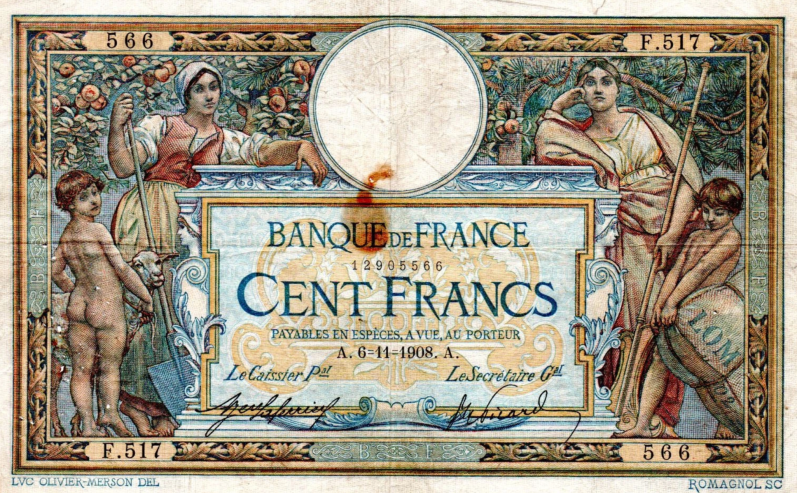
The First Multi-Colored Banknote
In 1910, the Banque de France introduced the first multicoloured banknote after 15 years of research to develop a printing technique capable of reproducing a four-colour design. This innovation transformed banknotes into intricate works of art, marking the beginning of a new era in banknote design that combined aesthetic appeal with enhanced anti-counterfeiting measures.
The bank enlisted the artist Luc-Olivier Merson to create this landmark note, officially titled “Four colours – Luc-Olivier Merson.”
Art Connoisseur Corner
Our monthly special selection of fantastic masterpieces on Numismatics, Exonumia, and Scripophily. Enjoy!
1908 100-franc; The “Four colors – Luc-Olivier Merson” verso. Allegories of Women and Children; Labor and Fortune - Printer: BdF - 182 x 112mm - Sig 7 - 5-Digit series number in larger Cartouche - Watermark: Ceres and Mercury in profile.
The design features a blue-and-gold frame that includes the Banque de France’s cartouche, with two allegorical figures: Agriculture, represented on the left with a child and a sheep beside a fruit-laden tree, and Commerce, depicted on the right with a child carrying goods for shipment.
The reverse side showcases an allegory of Labour and Fortune, providing a modern interpretation of the Banque de France's motto.
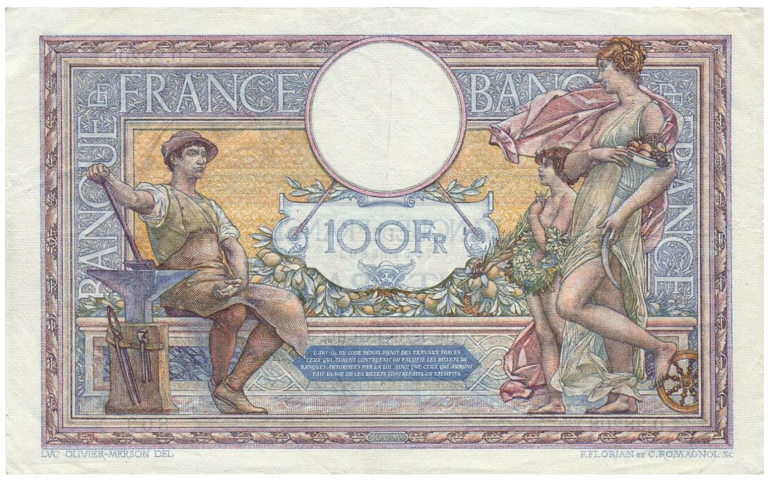
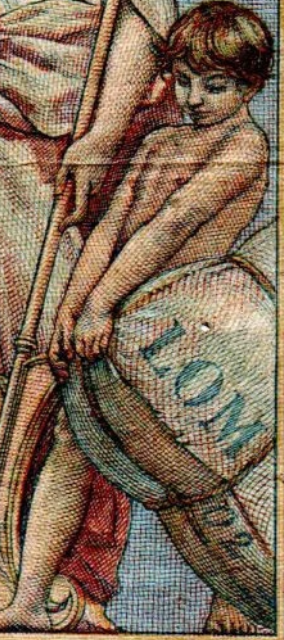
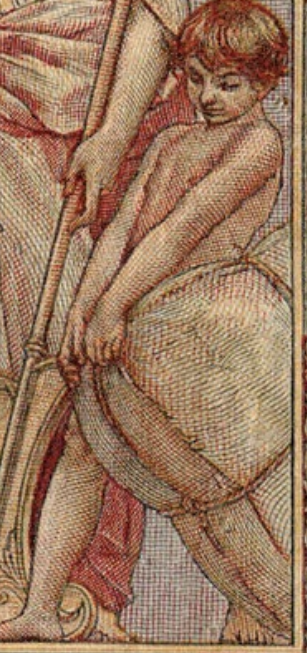
The 100 Franc Luc Olivier Merson note exists in two main variations regarding the "LOM" signature: with LOM (1908–1909) and without LOM (post-1910). The early "avec LOM" version features "LOM 02" on the sack, while the later "sans LOM" version removed this due to artist disagreement, making the earlier version generally more sought after.
May 2026 Selection
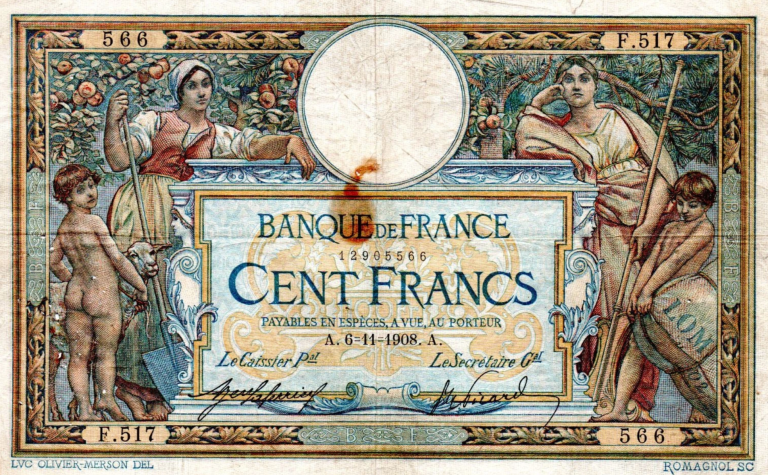
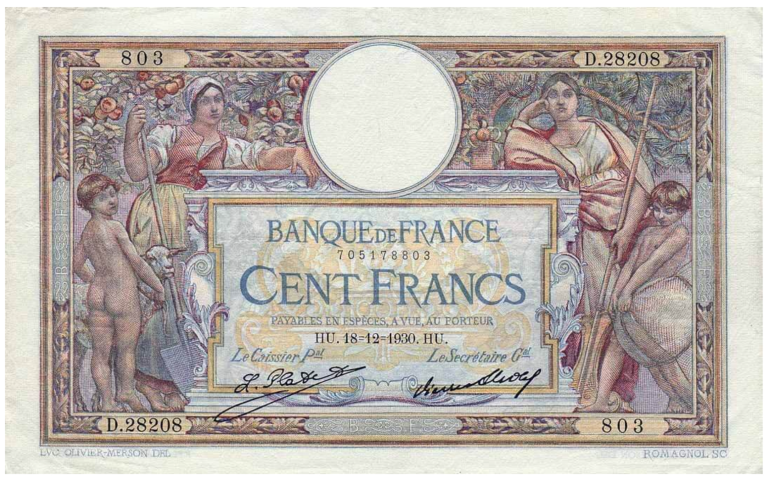
100 francs avec LOM (avec LOM) - 1908-1909
- Signature: Features "LOM 02" written on the sack held by the child on the right side of the front.
- Context: These were the earliest, original issues, generally considered more desirable by collectors.
- Alphabets: Typically found in series 1 to 824.
- Date: Authorized 1908-1909.
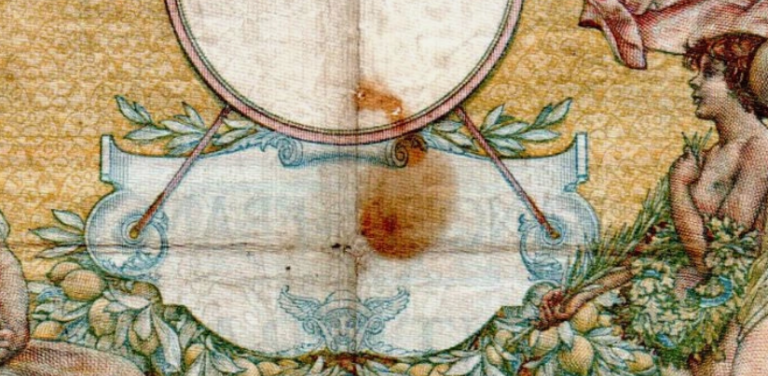
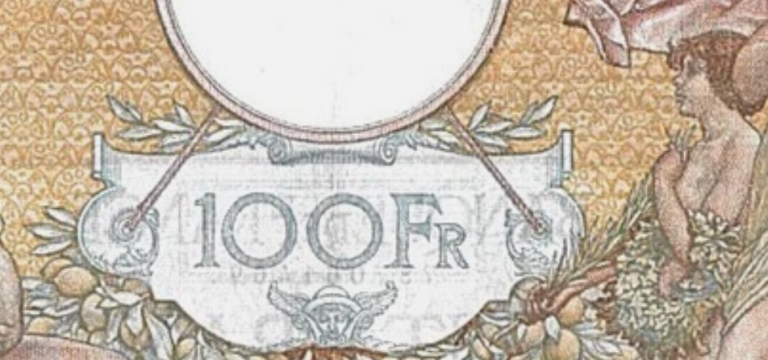
- Identification: The LOM mark is on the right-hand side of the obverse of the bag held by a child. "Sans LOM" notes frequently have a slightly modified, darker "100FR" on the back.
- Rarity/Value: The original "with LOM" (particularly early dates like 1908-1909) is generally more sought after by collectors due to its earlier issue and rarity.
100 Francs without LOM (sans LOM) - Post-1910
- Signature: The "LOM 02" inscription is removed from the sack, often replaced by a simpler look.
- Context: Introduced after a disagreement with the artist, this became the standard for later issues.
- Distinctions: Usually accompanied by a darker "100FR" on the back and different alphabets (starting from 825).
Merson's designs embraced the Academic style prevalent in the early 20th century, using more relatable human figures—such as a peasant woman and a laborer—rather than the more elite, traditional allegories. This was significant as banknotes were becoming increasingly common, requiring imagery that could resonate with a broader audience. Despite facing criticism upon its release, this revolutionary banknote remained in circulation until 1945.
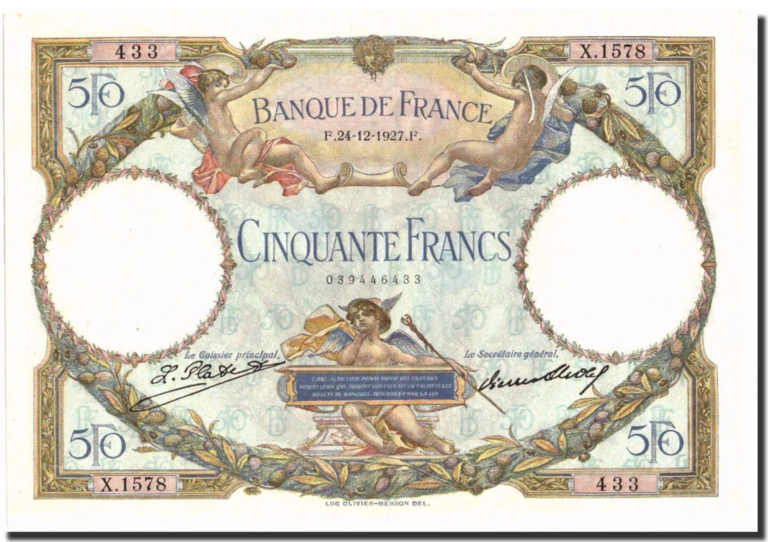
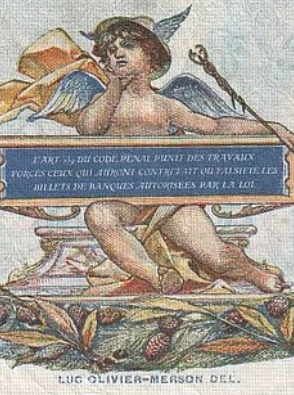
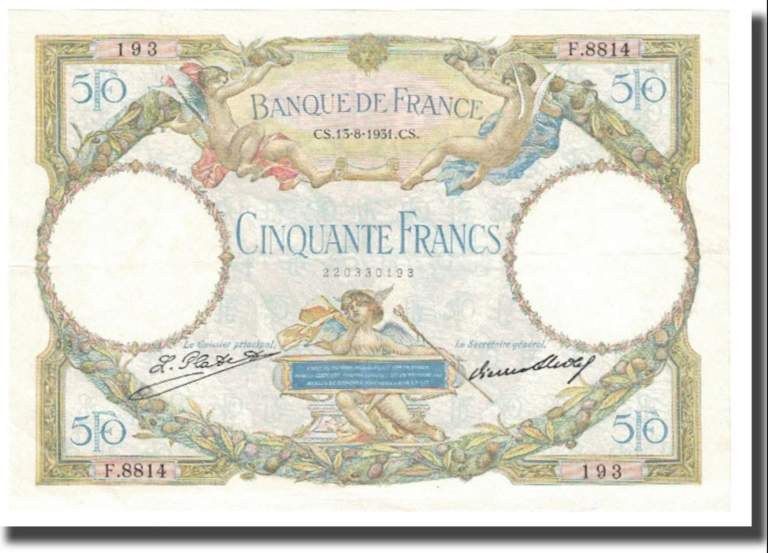
50 Francs Luc-Olivier Merson - Printer: BdF - 4/2/1928 - 170 x 123mm - Luc-Olivier Merson name in margin - Watermark: Busts of two women.
Starting with this note in 1930, BdF no longer mentions the artist's name in the margin of its banknotes.
Luc-Olivier Merson

Born Nicolas Luc-Olivier Merson in Paris, France, he grew up in an artistic household, the son of Charles-Olivier Merson, a painter and art critic. He studied under Gustave Chassevent at the École de Dessin and then Isidore Pils at the École des Beaux-Arts. Merson had his first work exhibited at the Paris Salon in 1866 and three years later was awarded the Prix de Rome. During the five years he spent working in Italy, he focused on religious and historical subjects in his art.
Back in France, in 1875, he won the first-prize medal at the exhibition by the Société des artistes français. Seen here is "Nôtre-Dame de Paris," one of Merson's best-known paintings, created in response to the huge popularity of the Victor Hugo novel of the same name. An 1881 work, with its mystical Gothic imagery, reflects the influence of the then-evolving Symbolist movement.
Merson's art became a vehicle for decorative commissions, undertaking major works for institutions such as the famous Palais de Justice (Courthouse), the Louis Pasteur Museum, and the mosaic in the chancel vault of the Basilica of the Sacré Cœur. He also did the artwork for stained-glass windows, an example of which can be found in the Church of the Holy Trinity at Rittenhouse Square in Philadelphia, Pennsylvania. His profile was considerably raised after he was awarded a gold medal for his painting at the 1889 Exposition Universelle, and in 1892, he was elected to the Académie des beaux-arts.
By 1900, Merson was designing postage stamps for the French and Monaco posts. By 1908, he had been contracted by the Bank of France to create a number of designs for some of the country's banknotes. Between 1906 and 1911, Luc-Olivier Merson taught at the École des Beaux-Arts. In recognition of his contribution to French culture, Luc-Olivier Merson was awarded the Legion of Honor.
Luc-Olivier Merson died in Paris in 1920, his work largely forgotten amid the overwhelming popularity of avant-garde art forms, exemplified by the Impressionists and other movements. Named as a Knight of the Legion of Honor during his life, he was elevated to the level of Commander posthumously.
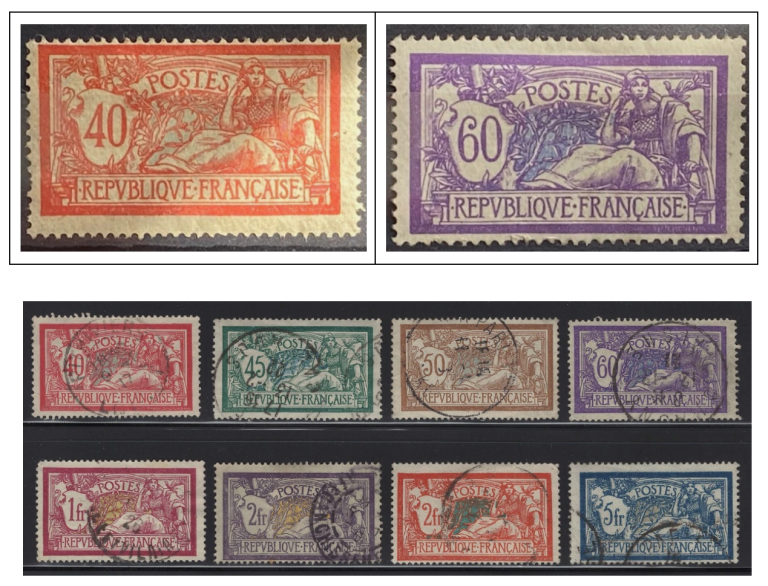
Liberty & Peace 1900-1929 "Liberty & Peace", designed by
Luc-Olivier Merson