Art Connoisseur Corner
The Beauty of The Tibetan Banknotes
1. Traditional woodblock printing
- Hand-carved: The entire banknote design is hand-carved in reverse on a wooden board by artisans in Lhasa before being printed.
- The lines are simple and unadorned: limited by the wood carving technique, the lines have a unique sense of ruggedness and asymmetry, showcasing the artistic characteristics of traditional Tibetan Thangka and scripture prints.
August
2026
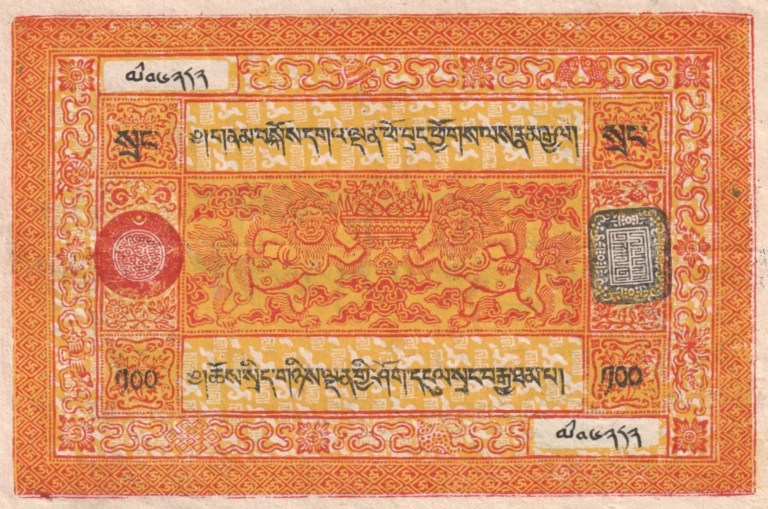
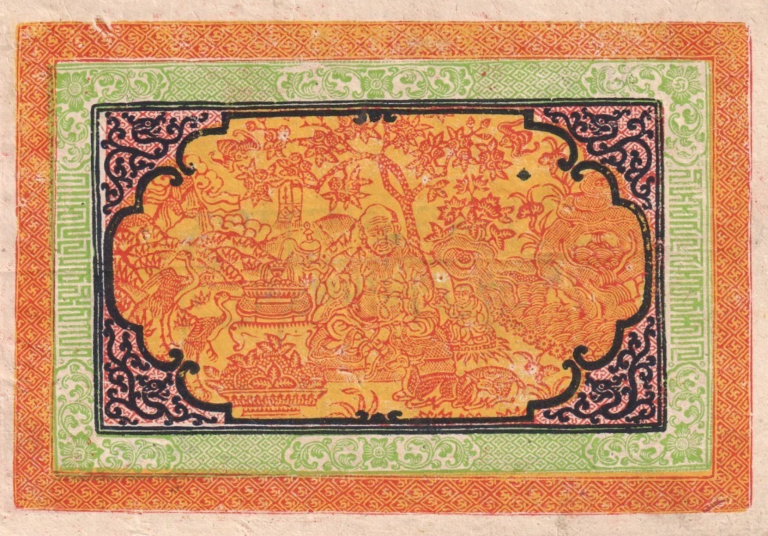
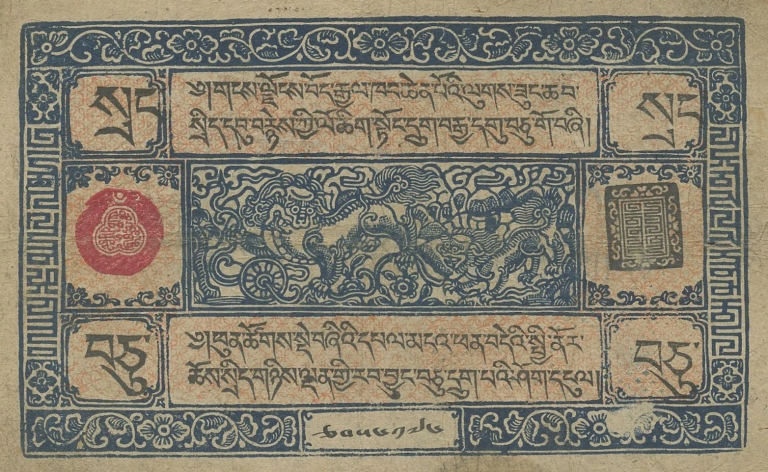
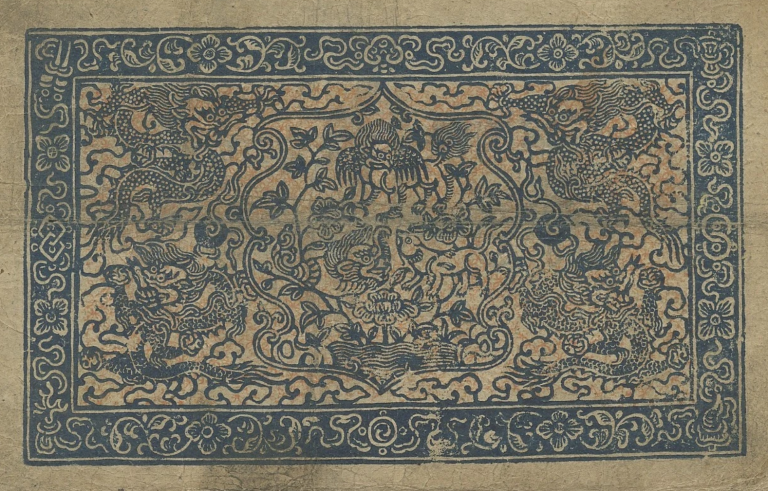
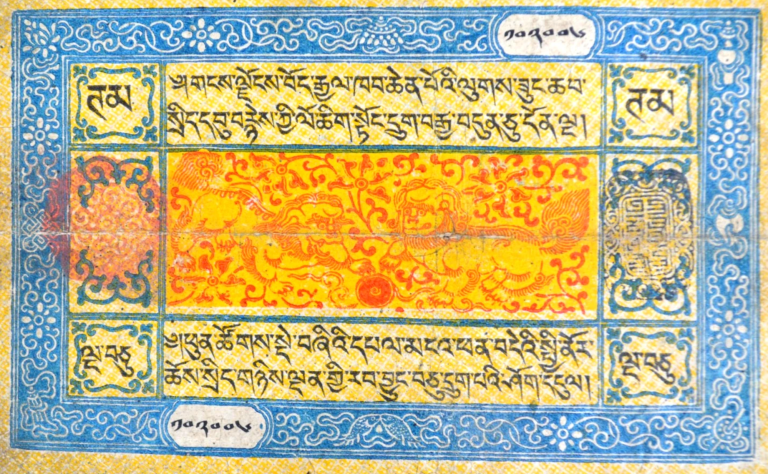
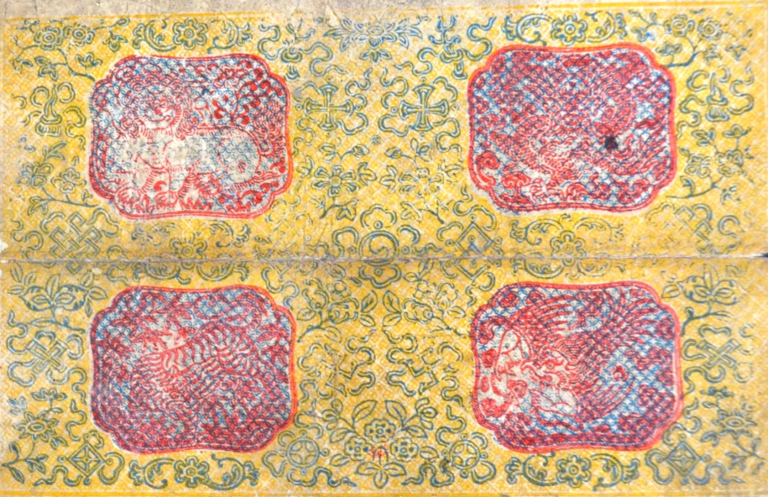
Tibetan banknotes possess extremely high artistic and cultural value in the history of Asian currency and folk craftsmanship.
2. Tibetan Aesthetic Totems
- Snow Lion and Auspicious Dragon: The main visual revolves around the snow lion, which symbolizes Tibet's political and religious power, and auspicious totems, while the border is covered with intricate scroll patterns and geometric meander patterns.
- Two-color printing : The core of the banknote uses blue and pink two-color printing, which was rare at the time. Although there are occasional misalignments, they create a unique sense of ombre beauty.
3. Calligraphy and movable seals
- Tibetan calligraphy: Both sides are decorated with exquisite Uchen handwritten Tibetan script, recording the issuance announcement.
- Handmade cinnabar seals: The banknotes are stamped with red cinnabar seals representing the spiritual organs of the Dalai Lama (round seal) and the government of the Kashag (square seal), transforming political power into visual art seals.
4. The beauty of craftsmanship from raw materials
- Wolfsbane handmade paper: Made by hand using plants unique to Tibet, the paper is thick, with coarse fibers, and has a natural yellowish hue and a rustic texture.
This 100-tael Tibetan banknote design has a very deep artistic connection with the Menri School, the oldest and most dominant school of Tibetan painting. The woodblock-printed Tibetan banknote is not only currency, but also a masterpiece that represents the Menri School's integration of secular printing techniques into the art of painting, moving beyond temple murals and scroll thangkas.
The artistic origins and inheritance between the two are mainly reflected in the following core aspects:
Tibet 100 Tam Srang Banknote (1937)
1. Strict adherence to the measurement system in iconography (Proportion & Iconography)
- Origins: The Menri school of painting was founded in the 15th century by the master Menla Dondrup Gyatso, whose book, "The Wish-Fulfilling Jewel of Iconographic Measurements," is considered the bible of Tibetan painting. The core characteristic of this school is its "strict adherence to rules," with ironclad proportions governing the facial features, hand gestures, and postures of Buddhas, Bodhisattvas, and saints.
- The image depicts a seated saint in the center of the banknote, whose geometric proportions of head, torso, and limbs perfectly conform to the iconographic measurements of the Menri school. Although the woodcut lines cannot be as finely detailed as hand-drawn ones due to printing limitations, his cross-legged "Vajrasana" posture and the angle of his hands holding ritual implements demonstrate the solemnity and restraint of the classic Menri school.
2. Landscape Styling:
- Origins: The greatest innovation of the Menri School in the history of Tibetan art was breaking away from the early Indo-Nepalese style of solid colors or simple geometric backgrounds, and instead absorbing the style of Central China (Ming Dynasty meticulous brushwork and blue-green landscape painting). The Menri School was adept at painting layered blue-green landscapes, auspicious clouds, blooming flowers, and realistic birds and animals behind deities.
- The reverse side of this banknote (the selected area in the image) features a typical Neo-Menri school (Mensa school) composition. The main deity is surrounded by auspicious cloud patterns in a Han Chinese style, rolling waves, and auspicious beasts such as cranes and deer, symbolizing longevity and good fortune. This technique of placing deities within miniature natural landscapes is a signature feature of the Menri school.
3. The "iron wire drawing" technique and the neatness and smoothness of the lines (Line Work)
- Origins: The Menri school of painting is known for its even, refined, neat, and fluid lines. In the "Black Thangka" (black-based, gold-lined thangka) that developed after the 17th century, the fluidity and expressiveness of the Menri school's lines reached their peak.
- Exhibits: When banknote designs are transformed into woodblock prints, designers must convert hand-drawn lines into woodblock lines that can withstand printing pressure. The folds (clothing folds) of the saint's robes on the banknotes and the curves of the lotus petals beneath his seat still retain the compactness, continuity, and dynamism characteristic of the Menri School of painting, demonstrating extremely high engraving and line drawing skills.
4. Patterned translation of mounting borders (inner frames) (Border Decoration)
- Origin: After a traditional Thangka painting is completed, it must be mounted on high-quality five-colored brocade. The borders of Thangka paintings and the murals on the pillars inside temples are often decorated with intricate "scroll patterns," "lotus patterns," and "swastika patterns."
- Presentation: When designing this banknote, Zhongduo Gesang Luobu directly "patterned" the mounting art of Thangka and temple murals. The three colored borders around the banknote, with their scrollwork and geometric grid distribution, perfectly replicate the decorative aesthetics of Menri school painters when decorating temple ceilings (caissons) or Thangka brocade frames.
Summarize
This 100-tael banknote is actually a "secularized and printed" carrier of Menri school art. It condenses the sacred visual language of Thangka, which originally belonged exclusively to temples and high monks for meditation and practice, into a banknote circulating in the market through ancient woodblock printing and handmade Tibetan paper. This makes every Tibetan who holds the banknote a miniature Menri School painting artwork in their hand.